
Pretend that this apple is the planet Earth – round, beautiful, and full of good things. Notice its skin, hugging and protecting the surface. Water covers approximately 75% of the surface.
Right away, cut the apple in quarters. Toss three quarters (75%) away.
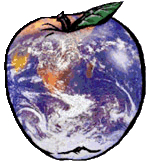
The three-quarters (75%) you just removed represents how much of the earth is covered with water – oceans, lakes, rivers, and streams. What is left (25%) represents the dry land.
50% of that dry land is desert, polar, or mountainous regions where it is too hot, too cold or too high to be productive.
So cut that dry land quarter in half and toss one piece away.
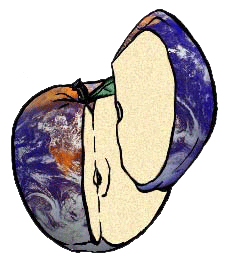
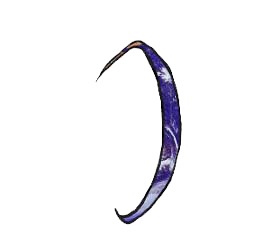
When 50% is removed, this is what is left. (12.5% of the original)
Of that 12.5%, 40% is severely limited by terrain, fertility, or excessive rainfall. It is too rocky, steep, shallow, poor, or too wet to support food production.
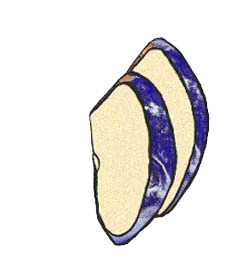
You are left with approximately 10% of the apple.
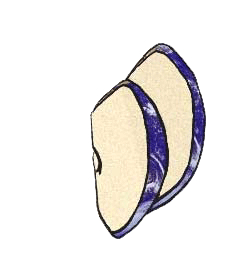
The remaining 10% (approximately*)- this small fragment of the land area – represents the soil we depend on for the world’s food supply. This fragment competes with all other needs – housing, cities, schools, hospitals, shopping centers, landfills, etc., etc. And, sometimes, it doesn’t win.
*There is a difficulty within the scientific community in coming up with an exact figure.
Courtesy of: The Natural Resources Conservation Service, Syracuse, NY, U.S. Department of Agriculture
Illustrations courtesy of: Rich Potter
 Earth Lady Education